
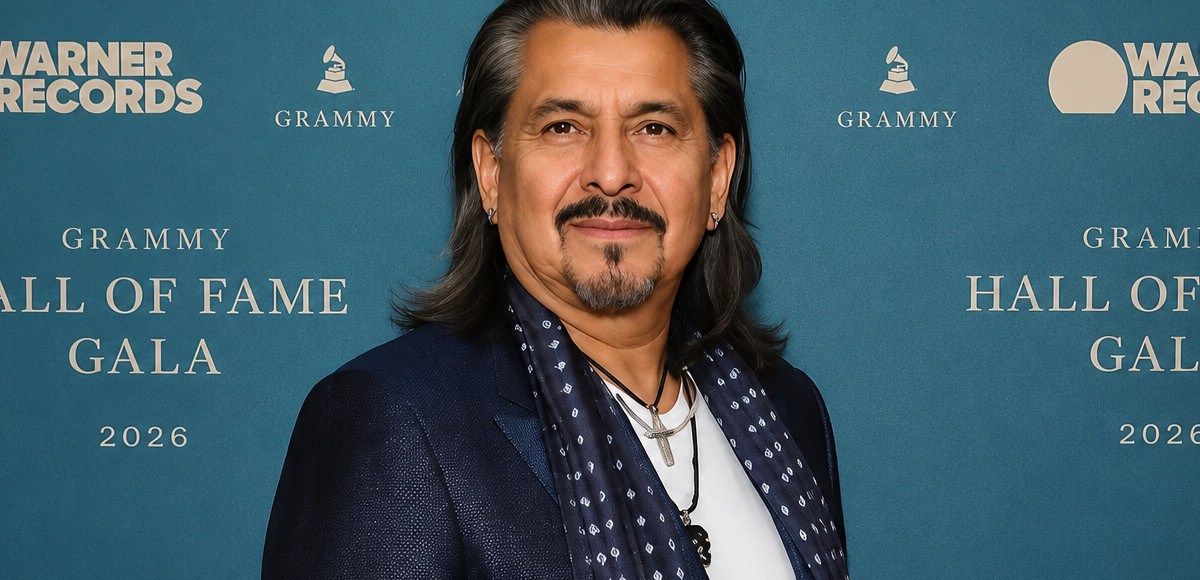



Pete Astudillo has spent more than four decades helping shape Tejano music, first as a member of Selena y Los Dinos and later as a songwriter, producer and artist in his own right. Now, one of the most important chapters of his career is unfolding in an unexpected place: alongside global superstar Karol G.
During a recent interview with Keith Leal on the Tejano Time Podcast, Astudillo opened up about his work on Karol G’s chart-topping “Alguien Que Te Amaba,” a collaboration that has generated significant buzz throughout the Latin music industry and, perhaps most importantly, brought renewed attention to Tejano music and its legacy.
Subscribe to Tejano Nation on YouTube
For Astudillo, the collaboration represents much more than another songwriting credit. He believes the song could help introduce a younger generation to Tejano while demonstrating that the genre still has a place in today’s rapidly changing musical landscape.
An Unexpected Call From Karol G’s Camp
Astudillo said his involvement with “Alguien Que Te Amaba” began in a way he never expected.
He was contacted through social media and initially thought the message was a joke or spam. After all, Astudillo had jokingly mentioned during interviews that he would love the opportunity to work with acclaimed songwriter and producer Edgar Barrera, who has become one of the most influential creative forces in contemporary Latin music.
Then the messages became more serious.
Eventually, Astudillo and Barrera connected by phone and began discussing the possibility of a songwriting session. When Astudillo learned that Barrera would be in Texas, the collaboration became a reality.
“I thought it was a joke,” Astudillo told Leal. “I thought I was getting punked.”
What followed was a songwriting session that Astudillo described as a unique experience.

He admitted he was nervous entering the room because he doesn’t typically participate in songwriting sessions with people he doesn’t already know well. Much of his historic songwriting work came through close relationships with Selena, A.B. Quintanilla III, and Ricky Vela.
But those nerves quickly disappeared.
The song became a genuine collaboration between Astudillo, Barrera and Karol G, with all three contributing to the creative process.
“There was excitement in the air,” Astudillo explained, describing the experience as a meeting between generations. “I was excited to be there. This is the new generation. And they were kind of excited to be with me.”
That dynamic became one of the most meaningful aspects of the project for Astudillo.
A Bridge Between Selena’s Generation and Karol G’s
Karol G has never hidden her admiration for Selena and the influence of Tejano music on her artistic vision.
For Astudillo, having a global superstar step into the Tejano sound is significant because Karol G isn’t simply borrowing the style—she is doing so because she genuinely loves it.
He pointed to her previous work, including “Mi Ex Tenía Razón,” as evidence of her appreciation for the sound and aesthetic associated with Selena and the 1990s Tejano movement.

But Astudillo believes “Alguien Que Te Amaba” takes that relationship with Tejano music even further.
“Why else would you bring in one of the writers for Selena if you didn’t want to get that sound?” Astudillo said.
The songwriter sees the collaboration as a continuation of Karol G’s love for Tejano rather than simply a Selena tribute.
And that distinction matters to him.
Astudillo believes Karol G is approaching the music from an authentic place—not because she needs Tejano to expand her audience, but because she genuinely enjoys the genre.
Why Karol G’s Tejano Connection Matters
Perhaps the most powerful portion of Astudillo’s conversation with Leal centered on what “Alguien Que Te Amaba” could mean for Tejano music.
Astudillo acknowledged that Tejano is a smaller musical market than the one Karol G normally occupies. That makes her decision to embrace the sound particularly meaningful.
He believes she is bringing her enormous global audience into Tejano while simultaneously introducing Tejano music to listeners who may have never explored the genre.
“She’s bringing so much attention to our market,” Astudillo said. “So much needed attention, giving us a shot of energy, a shot of youth.”
That last point is especially important.
Astudillo believes the future of Tejano depends on attracting younger listeners.
He compared the potential impact of Karol G’s collaboration to what happened with Frontera, whose success helped introduce Tejano-influenced music to a broader contemporary audience.
For Astudillo, the answer isn’t to reject outside influences. It’s to embrace opportunities that can expand the genre.
“We need to embrace anything good that’s going to grow our market,” he said.
He believes younger listeners who may have previously viewed Tejano as music belonging to an older generation could hear Karol G’s song and suddenly think differently.
“Maybe after this song, ‘Hey, Tejano is pretty cool, man. Let me give it another listen.’”
That, Astudillo believes, could be one of the most important outcomes of the collaboration.
“There’s Going to Be a Before and After”
Astudillo stopped short of claiming that one song will single-handedly transform Tejano music. But he believes “Alguien Que Te Amaba” could become an important catalyst.
“I think as this song is going to, I think there’s going to be a before and after in the Tejano industry,” he said.
He acknowledged that the genre already has artists and bands working hard to keep Tejano alive, including groups performing week after week across Texas and beyond.
But he believes Karol G’s involvement can provide something the genre desperately needs: visibility among younger audiences.
“I’m not saying that this song is going to change the world or change Tejano music forever, but it will help,” Astudillo said.
And for a genre that has experienced major highs, difficult periods and constant evolution, Astudillo believes that positive momentum should be welcomed.
Tejano Has Always Evolved
Astudillo also pushed back against the idea that Tejano must remain locked into a particular sound or era. He pointed out that the music of the 1970s wasn’t the same as the Tejano of the 1980s, and the Tejano of the 1980s wasn’t the same as the music of the 1990s.
The genre evolved.
Orchestras gave way to new keyboard-driven sounds. Cumbia became increasingly important. Groups such as Selena y Los Dinos, La Mafia, and Mazz helped redefine the possibilities of Tejano.
For Astudillo, that history proves that change isn’t something the genre should fear.
“We should embrace change,” he said. “Positive change because it is going to be good for the market and we need the youth to keep the market going.”
More Than One Collaboration
While “Alguien Que Te Amaba” is generating the most attention, Astudillo’s recent creative work extends well beyond the Karol G collaboration.
He continues to contribute to projects that connect Tejano’s past, present and future, including David Lee Garza‘s “Haces Falta Tú,” a Flaco Jiménez tribute featuring Los Texmaniacs, Chris Pérez and Louie The Singer, and work connected to Jennifer Peña, including “Wakala.”
Those collaborations demonstrate the breadth of Astudillo’s career and his continued ability to move between generations and musical styles.
His history alone places him at the center of Tejano’s legacy.
As a member of Selena y Los Dinos, Astudillo was part of the musical foundation that helped propel Tejano onto an international stage. As a songwriter, he collaborated with A.B. Quintanilla, Ricky Vela and Selena, contributing to songs that remain central to the genre’s history.
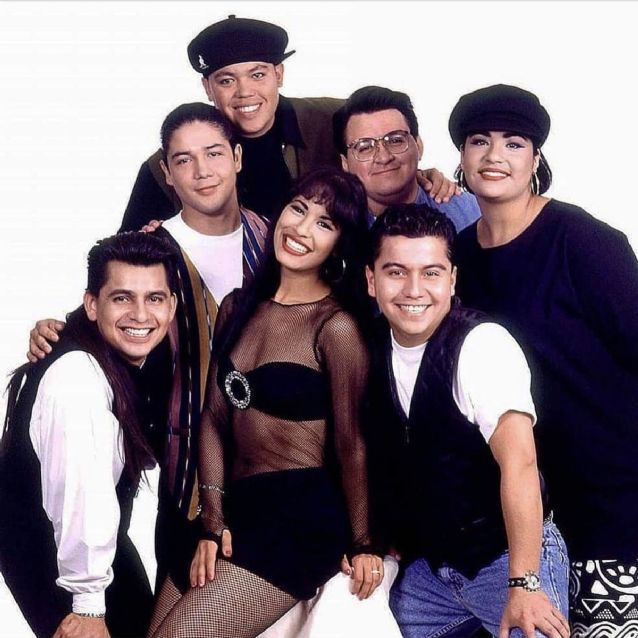
He described Selena y Los Dinos as his musical education.
“Selena y Los Dinos was my school,” Astudillo said. “It was my elementary, my junior high, my college, my university, my master’s degree.”
He remains deeply grateful to the Quintanilla family and the musicians who helped shape him.
That experience is now being passed forward.
Pete Astudillo’s Advice to the Next Generation
Astudillo’s conversation with Leal ultimately became as much about the future of Tejano as it was about his own career.
His message to young artists was straightforward: keep going, learn the craft, support one another and don’t be afraid of rejection.
Even after decades of success and some of the biggest songs in Tejano history, Astudillo said he still experiences rejection.
“Just because I wrote, doesn’t mean that every song I put out there, people are going to want it or like it,” he explained.
The key, he said, is learning to take rejection and criticism and continue moving forward.
He also called on established artists and industry veterans to do more to mentor emerging musicians.
Astudillo suggested that events such as the Tejano Music Awards and Fan Fair could incorporate workshops where veteran artists, writers and producers could share their experiences and help young musicians understand the realities of the music business.
“We have to mentor a little bit more,” he said. “We have to educate a little bit more. And we have to respect the craft.”
But mentorship cannot replace audience support.
Astudillo urged Tejano fans to support the artists who continue working every weekend to keep the music alive.
“Let’s lift each other up. Let’s help each other,” he said.
That means attending bailes, concerts, festivals and community events, buying music, supporting artists and recognizing the sacrifices musicians make to pursue their careers.
From Migrant Fields to the World’s Biggest Stages
Astudillo’s advice carries added weight because of his own journey.
He spoke candidly about growing up in a humble family, working as a migrant worker and later working in restaurants as a dishwasher, cook and busboy before eventually performing on some of the world’s biggest stages alongside Selena.
His career took him from those humble beginnings to collaborations with A.B. Quintanilla, Ricky Vela, Selena, David Lee Garza, Los Musicales, the Kumbia Kings, and countless other artists.
His story is a reminder that where an artist starts does not determine where they can ultimately go.
“Si te olvidas de donde vienes, te pierdes en el camino para donde vas,” Astudillo said.
If you forget where you came from, you can lose your way to where you’re going.
That philosophy appears to define Astudillo’s career today.
He remains firmly connected to the Tejano music that shaped him while embracing new artists, new sounds and new opportunities.
A Moment Tejano Should Embrace
The significance of “Alguien Que Te Amaba” may ultimately extend beyond its chart performance or the names attached to its songwriting credits.
For Pete Astudillo, the song represents a rare intersection of Tejano history and contemporary Latin music—a moment when one of the genre’s most important songwriters is working alongside one of today’s biggest global stars.
And he believes Tejano should welcome it.
Rather than viewing Karol G’s embrace of the genre as competition, Astudillo sees it as an invitation.
An invitation for her audience to discover Tejano.
An invitation for young listeners to reconsider the genre.
And an invitation for Tejano artists to continue evolving while honoring the music’s roots.
“Tejano is coming back,” Astudillo said. “I really do feel that it is.”
Whether “Alguien Que Te Amaba” ultimately becomes the turning point he envisions remains to be seen. But one thing is already clear: Pete Astudillo believes Tejano’s future depends on evolution, collaboration and, most importantly, the next generation.
And with Karol G bringing Tejano-inspired music to a global audience, Astudillo believes the genre has been given something it desperately needs—a new opportunity to be heard.
Follow Tejano Nation on Facebook, X (formerly Twitter), and Instagram, and subscribe to our YouTube channel to keep up with everything Tejano. Listen to new Tejano music first with our Spotify playlists and iHeartRadio podcast.


Public Voting Now Open for the 46th Annual Tejano Music Awards
Fans can vote for their favorite Tejano artists through October 18 as the awards show prepares to return to Katy, Texas, for the second consecutive year

Marlissa Vela Honors Her Father’s Legacy With New Single ‘Me Voy Al Amanecer’
The Tejano singer-songwriter unveils the fourth single honoring her father, Ruben Vela, after overcoming personal hardships and production setbacks

Alexis Aliyah Debuts With New Single and Music Video ‘Contigo’
The daughter of Grupo Negami frontman Carlos Villegas begins carving out her own musical identity with a soulful love song
Discover more from Tejano Nation
Subscribe to get the latest posts sent to your email.


0 comments on “Pete Astudillo talks Karol G, ‘Alguien Que Te Amaba’ & Tejano’s Future”